OpenAI Launches GPT-6 Astra: A Model That Can Operate Your Computer and Work Independently All Day
OpenAI released GPT-6 Astra on September 4, 2026 — a reasoning model that can operate computer interfaces and stay on task independently for long stretches, scoring 72.6% on OSWorld 2.0 and roughly halving task completion time. Key benchmarks, how it differs from GPT-5.6 Sol, pricing and rollout, and what it means for creators and small businesses, plus 3 steps to get ready.
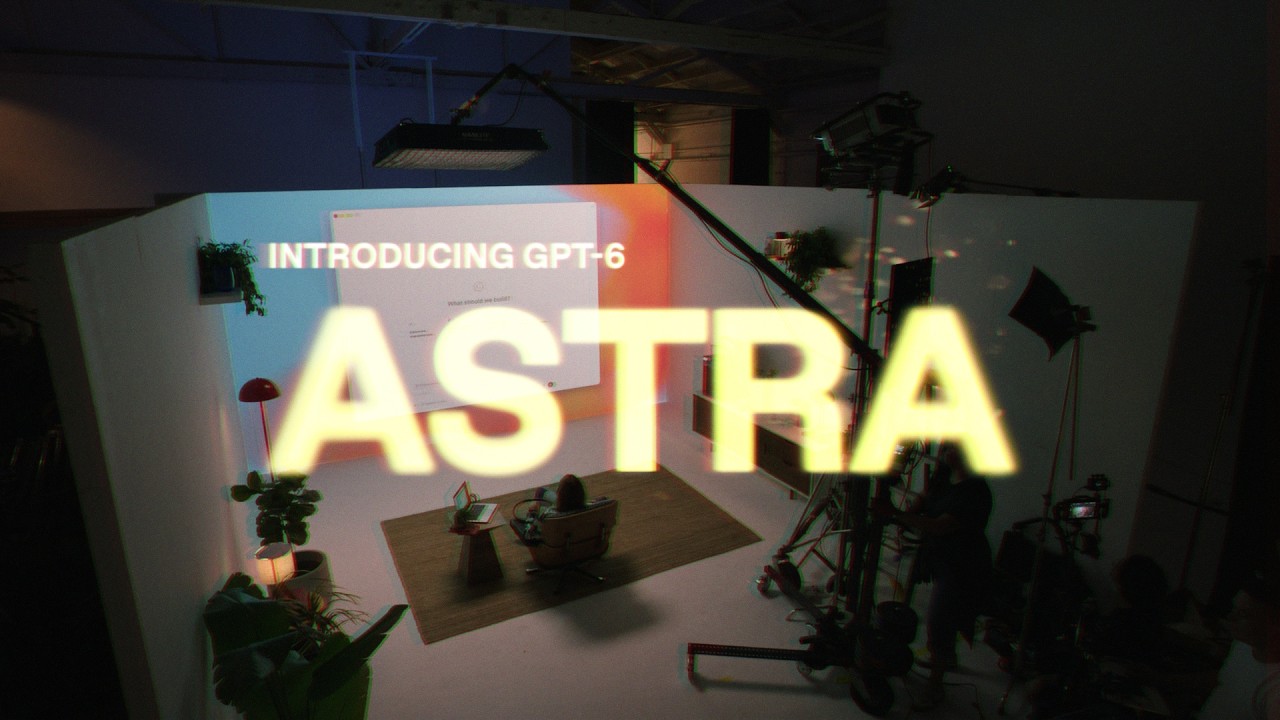
Bottom line: On September 4, 2026, OpenAI released GPT-6 Astra, which it describes as "a reasoning model connected to a growing operating system for getting work done." In plain terms, the model doesn't just answer questions — it can operate your computer, browser, and desktop software, staying on task independently for long stretches, and finding its own way around obstacles instead of getting stuck. For creators, freelancers, and small business owners who get things done with their own two hands every day, this means "supervising outcomes" is starting to replace "doing the work yourself" — arguably the most important skill gap to get ahead of right now.
TL;DR:
① GPT-6 Astra scores 72.6% on computer-use benchmark OSWorld 2.0, and cuts task completion time roughly in half (75 minutes → 40 minutes) versus the prior model.
② It can work independently for long stretches, finding workarounds when it hits problems instead of freezing.
③ Pricing: $10/M input tokens, $50/M output tokens. Rollout starts with trusted organizations before reaching Plus/Pro/Enterprise/API.
④ Your move: start auditing which repetitive, clearly-defined computer tasks in your workflow could be handed off to an AI agent as a whole job, not just a chat prompt.
OpenAI's official launch video: real workflow demos including e-commerce listings, legal documents, and booking a tennis court. (Video source: OpenAI's official YouTube channel)
So what actually is GPT-6 Astra?
OpenAI's positioning is clear: GPT-6 Astra isn't just "a smarter model" — it's reasoning capability wired into "a growing operating system for getting work done." It can directly operate software interfaces, browsers, and desktop apps, rather than just handing you text advice and leaving the execution to you.
Two other capabilities stand out:
- It can sustain long-horizon work: it's less likely to drift off course over time, and it supports asynchronous clarification — if something's unclear, it'll toss you a quick question without pausing everything else it's doing while it waits for your answer.
- Multi-agent orchestration: it can run several agents in parallel to try different approaches, making it less prone to the "dead loops" earlier models fell into, and better at folding new instructions you throw in mid-task back into the original goal instead of losing the plot.
Codex, OpenAI's coding agent, got an upgrade too: it can now persist notes and a searchable history across context windows — effectively letting it "remember" what it already did in earlier sessions.
The key numbers at a glance
Most of the benchmarks OpenAI published are framed against the prior model, GPT-5.6 Sol:
| Benchmark | GPT-6 Astra | Notes |
|---|---|---|
| Computer use (OSWorld 2.0) | 72.6% | GPT-5.6 Sol scored 65.7%; task time dropped from 75 to ~40 minutes |
| ARC-AGI-3 (standard) | 62.7% | General reasoning benchmark |
| ARC-AGI-3 (OpenAI adapter) | 99.9% | Measured with an OpenAI-provided adapter — not the same baseline as the standard score |
| Coding (Terminal-Bench 4.0) | 57.9% | GPT-5.6 Sol scored 37.3% |
| Cybersecurity (ExploitBench) | 100% | — |
| GPQA Diamond | 96% | Graduate-level science Q&A |
| FrontierMath Tier 4 | ~98% | High-difficulty math problems |
On safety, OpenAI notes that in adversarial testing, the rate of "boundary violations" (taking explicitly disallowed actions) dropped from 48.2% with GPT-5.6 Sol to 0% with Astra — meaning it's better at holding the line when it's explicitly told not to do something.
When can you use it, and how much does it cost?
Release date: September 4, 2026. The rollout is staged: it starts with OpenAI's Trusted Access Program, then expands to Plus, Pro, Business, Enterprise, and the API, with AWS and Microsoft Foundry following.
API pricing: $10/M input tokens, $1/M cached input tokens, $50/M output tokens (rates double once input exceeds 272K tokens). Technical specs: a 1.05M-token context window, a 128K-token max output, a knowledge cutoff of April 30, 2026, and support for web search, code interpreter, MCP, and computer-use tools.
What does this mean for creators and small businesses?
If you're running things solo or with a small team — handling content, customer service, and back-office admin yourself — this shift is directly relevant to you:
- "Delegating" replaces "doing": repetitive, clearly-defined computer tasks — competitor research, filling out forms, comparing prices, organizing back-office data — will increasingly get handed off as a whole job to an AI agent, instead of being clicked through step by step.
- Your role shifts to "reviewer": the core skill moves from "can you do it" to "can you tell whether the AI did it right" — which requires knowing your own workflow well enough to spot when something's gone off track.
- Permissioning becomes a real decision: letting an AI agent into your inbox, back office, or payment tools means deciding how much access to actually grant — that's not something you can leave on default settings anymore.
3 steps you can start on right now
Step 1️⃣: Audit which tasks can be handed off wholesale
List out the repetitive, clearly-defined computer tasks you currently do. Use this prompt to help sort them:
Step 2️⃣: Start with low-stakes, reversible tasks
Don't start by handing off anything hard to undo, like payments or sending emails. Begin with tasks where a mistake is easy to fix — organizing data, drafting a first pass, compiling a comparison table — and build up your trust baseline from there.
Step 3️⃣: Make a habit of checking in afterward
Delegating to an agent isn't the same as walking away entirely. Set a fixed checkpoint — say, five minutes at the end of each day to review what decisions the agent made — so oversight becomes a routine part of your workflow, not something you only remember after something's gone wrong.
A more measured take: don't go all-in just yet
The numbers are impressive, but a few things are worth keeping in perspective:
- Benchmarks are lab conditions: environments like OSWorld and ARC-AGI have clean, well-defined task boundaries — real business work is messier and less predictable.
- Cost isn't trivial: at $50/M output tokens, running long, frequent agent tasks will add up to a lot more than casual chat usage — worth doing the math before committing.
- It's not universally available yet: the rollout is staged, and most demos being shown right now are OpenAI's own curated success cases; regular users will have to wait for their turn.
The direction — AI moving from "answering questions" to "actually doing the work" — is worth taking seriously and preparing for. Whether it can replace you right now is something worth testing for yourself before you decide.
FAQ
Q: Can I use GPT-6 Astra right now?
Not yet for most people — it's currently limited to OpenAI's Trusted Access Program, with Plus and Pro users getting access in later phases.
Q: I don't code — does this matter to me?
Yes. "Computer use" means operating everyday software interfaces and browsers, not just developer tools — filling out forms, comparing prices, organizing data are exactly the kind of tasks this covers.
Q: How does this relate to OpenAI's earlier plan to merge ChatGPT, Codex, and Atlas into a "super app"?
Same direction — pushing AI from "chat tool" toward "agent that does the work itself." For more background, see our earlier breakdown of OpenAI's super app plan.
Sources and further reading
- This article is based on: The Neuron — "GPT-6 Astra: Everything You Need to Know About OpenAI's New Model" (by Grant Harvey, published September 4, 2026).
- More videos: early developer impressions, Arena AI's reproducible 3D scene test, Matthew Berman's full review.
- Further reading: OpenAI's plan to merge ChatGPT, Codex, and Atlas into a "super app", the complete GEO guide.
Want AI to actually get things done instead of adding to the mess? I've collected the prompts and workflows I actually use in the Digital Toolbox — ready to use as-is. The ChatGPT Workplace Prompt Pack in there is completely free. If you need your whole AI workflow or website planned out in one go, feel free to reach out.